
TNPSC General Science Quiz 2026: Free MCQs with Answers
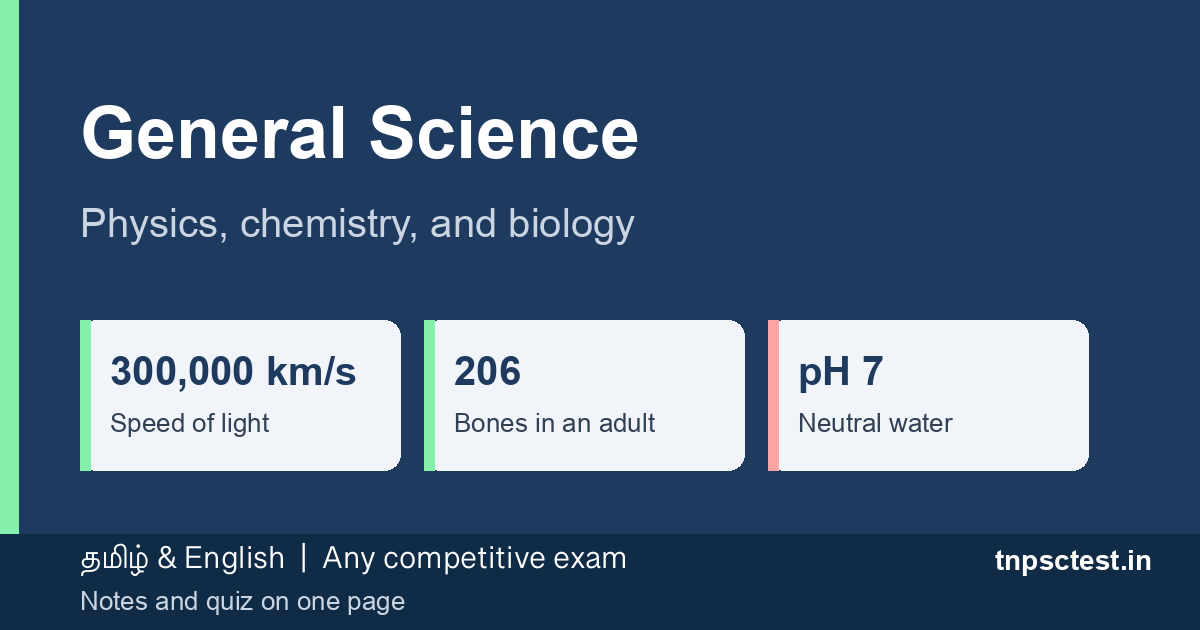
General science on this paper is a short list of numbers people swap. Light travels at about 3 × 10⁸ metres a second. Sound in air is about 340. Water is heaviest at 4°C, not at the temperature where it boils. I put the swapped numbers on the first list. Revise from the Tamil list. The English list is the same numbers, and the questions come after both.
Start the test / தேர்வைத் தொடங்கு
Table of Contents
- நினைவு
- அலகுகள்
- இயக்கமும் விசையும்
- வெப்பம்
- ஒலியும் ஒளியும்
- மின்சாரமும் காந்தமும்
- அணுவும் விண்வெளியும்
- பொருளும் வேதிப்பொருளும்
- கார்பனும் அன்றாடப் பொருளும்
- செல்லும் தாவரமும் மரபும்
- உடலும் உணவும்
- நோயும் நலமும்
- கருவிகளும் அறிஞர்களும்
- Remember
- Units
- Motion and force
- Heat
- Sound and light
- Electricity and magnetism
- Atom and space
- Matter and chemistry
- Carbon and daily life
- Cell, plants, and genes
- Body and food
- Disease and health
- Instruments and scientists
- Quiz
நினைவு
- ஒளியின் வேகம் வினாடிக்கு சுமார் 3 × 10⁸ மீட்டர். காற்றில் ஒலியின் வேகம் சுமார் 340 மீட்டர்.
- அடிப்படை SI அலகுகள் 7: மீட்டர், கிலோகிராம், நொடி, ஆம்பியர், கெல்வின், மோல், கேண்டலா.
- நீர் 0°C இல் உறையும். 100°C இல் கொதிக்கும். 4°C இல் அடர்த்தி மிக அதிகம்.
- நடுநிலை pH 7. அமிலம் 7-க்குக் கீழ். காரம் 7-க்கு மேல்.
- காற்றில் நைட்ரஜன் 78%. ஆக்சிஜன் 21%.
- மனித உடலில் எலும்புகள் 206. இதயத்தில் அறைகள் 4. உடல் வெப்பம் 37°C.
- நிறையும் எடையும் ஒன்றல்ல. நிறை கிலோகிராமில் அளக்கப்படும். எடை நியூட்டனில் அளக்கப்படும்.
- ஒளி ஆண்டு என்பது தூரத்தின் அலகு. காலத்தின் அலகு அல்ல.
அலகுகள்
- SI முறை 1960-இல் ஏற்கப்பட்டது. நீளம் மீட்டர். நிறை கிலோகிராம். காலம் நொடி.
- மின்னோட்டம் ஆம்பியர். வெப்பநிலை கெல்வின். பொருளின் அளவு மோல். ஒளிச்செறிவு கேண்டலா.
- தளக் கோணத்தின் அலகு ரேடியன். திண்மக் கோணத்தின் அலகு ஸ்டெரேடியன்.
- விசை நியூட்டன். அழுத்தம் பாஸ்கல். ஆற்றல் மற்றும் வேலை ஜூல். திறன் வாட்.
- அதிர்வெண் ஹெர்ட்ஸ். மின்னூட்டம் கூலூம். மின்னழுத்தம் வோல்ட். மின்தடை ஓம்.
- அழுத்தம் என்பது விசையைப் பரப்பால் வகுத்த அளவு. பெருக்கிய அளவு அல்ல.
- ஒரு ஒளி ஆண்டு சுமார் 9.46 × 10¹² கி.மீ. ஒரு குதிரைத் திறன் 746 வாட்.
- மின் கட்டணத்தில் ஓர் அலகு 1 கிலோவாட் மணி.
இயக்கமும் விசையும்
- நியூட்டன் விதிகள் 1687-இல் வெளியாயின. முதல் விதி நிலைம விதி. இரண்டாம் விதி F = ma. மூன்றாம் விதி வினைக்கு எதிர் வினை உண்டு.
- உந்தம் என்பது நிறையும் திசைவேகமும் பெருக்கிய அளவு. மோதலில் மொத்த உந்தம் மாறாது.
- புவி ஈர்ப்பு முடுக்கம் 9.8 மீ/வி². துருவத்தில் அதிகம். நிலநடுக்கோட்டில் குறைவு.
- நிலவில் ஈர்ப்பு புவியின் ஆறில் ஒரு பங்கு. எனவே நிலவில் எடை குறையும். நிறை குறையாது.
- புவியிலிருந்து தப்பும் திசைவேகம் வினாடிக்கு சுமார் 11.2 கி.மீ.
- வேலை என்பது விசையும் தூரமும் பெருக்கிய அளவு. திறன் என்பது ஒரு நொடியில் செய்த வேலை.
- இயக்க ஆற்றல் ½ mv². நிலை ஆற்றல் mgh. ஆற்றல் அழிவதில்லை. ஒரு வடிவிலிருந்து மற்றொன்றுக்கு மாறும்.
- ஆர்க்கிமிடீஸ் விதி: மிதக்கும் பொருள் வெளியேற்றிய நீரின் எடை அளவுக்கு மேல்நோக்கு விசையைப் பெறும்.
- பாஸ்கல் விதி: மூடிய திரவத்தில் அழுத்தம் எல்லா இடத்திலும் ஒரே அளவில் பரவும். நீரியல் தூக்கி இதன்படி இயங்கும்.
வெப்பம்
- வெப்பம் மூன்று வழிகளில் பரவும். கடத்தல், வெப்பச்சலனம், கதிர்வீச்சு.
- கடத்தல் திடப்பொருளில் நிகழும். வெப்பச்சலனம் திரவத்திலும் வாயுவிலும் நிகழும். கதிர்வீச்சுக்கு ஊடகம் தேவையில்லை. சூரிய வெப்பம் கதிர்வீச்சில் வருகிறது.
- செல்சியஸ் அளவில் உறைநிலை 0, கொதிநிலை 100. ஃபாரன்ஹீட்டில் 32 மற்றும் 212. கெல்வினில் 273 மற்றும் 373.
- K = °C + 273. °F = 1.8 × °C + 32. -40° இல் இரண்டு அளவுகளும் ஒரே எண்ணைக் காட்டும்.
- முழுமையான பூஜ்யம் 0 K. அது சுமார் -273°C.
- நீருக்கு தன்வெப்பம் மிக அதிகம். அதனால் கடற்கரையில் வெப்பம் மிதமாக இருக்கும்.
- உள்ளுறை வெப்பம் என்பது வெப்பநிலை மாறாமல் நிலை மாற்றத்துக்குத் தேவையான வெப்பம்.
- பாயில் விதி: வெப்பநிலை மாறாதபோது வாயுவின் அழுத்தமும் கனஅளவும் பெருக்கல் மாறிலி. சார்லஸ் விதி: அழுத்தம் மாறாதபோது கனஅளவு வெப்பநிலைக்கு நேர்விகிதம்.
ஒலியும் ஒளியும்
- ஒலி நெட்டலை. அதற்கு ஊடகம் தேவை. வெற்றிடத்தில் ஒலி செல்லாது.
- ஒலியின் வேகம் திடப்பொருளில் அதிகம். திரவத்தில் குறைவு. வாயுவில் மிகவும் குறைவு.
- கேட்கும் எல்லை 20 முதல் 20,000 ஹெர்ட்ஸ். அதற்குக் கீழே குற்றொலி. மேலே மீயொலி.
- தெளிவான எதிரொலி கேட்க எதிரொலிக்கும் பரப்பு குறைந்தபட்சம் 17 மீட்டர் தொலைவில் இருக்க வேண்டும்.
- ஒலியின் அளவு டெசிபலில் அளக்கப்படும். சுருதி அதிர்வெண்ணைச் சார்ந்துள்ளது.
- ஒளியின் வேகம் வினாடிக்கு 3 × 10⁸ மீட்டர். சூரிய ஒளி புவியை சுமார் 8 நிமிடம் 20 நொடியில் அடையும்.
- வெள்ளொளியை முப்பட்டகம் ஏழு நிறமாகப் பிரிக்கும். ஊதா, கருநீலம், நீலம், பச்சை, மஞ்சள், ஆரஞ்சு, சிவப்பு. சிவப்புக்கு அலைநீளம் அதிகம். வளைவு குறைவு.
- வானம் நீலமாகத் தெரியக் காரணம் ஒளிச்சிதறல். வானவில் ஒளிவிலகலும் உட்பிரதிபலிப்பும் சேர்ந்து உருவாகிறது.
- குவி லென்ஸ் தூரப்பார்வைக் குறையைச் சரிசெய்யும். குழி லென்ஸ் கிட்டப்பார்வைக் குறையைச் சரிசெய்யும்.
- சி. வி. ராமன் கண்டறிந்த ராமன் விளைவுக்கு 1930-இல் நோபல் பரிசு வழங்கப்பட்டது. தேசிய அறிவியல் நாள் பிப்ரவரி 28.
மின்சாரமும் காந்தமும்
- ஓம் விதி: V = IR. இது 1827-இல் ஜார்ஜ் ஓம் வெளியிட்டது.
- தொடரிணைப்பில் மின்னோட்டம் எல்லா இடத்திலும் ஒரே அளவு. பக்க இணைப்பில் மின்னழுத்தம் ஒரே அளவு. வீட்டு இணைப்பு பக்க இணைப்பு.
- இந்தியாவில் வீட்டு மின்சாரம் 230 வோல்ட், 50 ஹெர்ட்ஸ் மாறுமின்னோட்டம்.
- மின் திறன் P = VI. உருகி மின்சுற்றைப் பாதுகாக்கும். அதிக மின்னோட்டத்தில் உருகிவிடும்.
- மின்விளக்கு இழை டங்ஸ்டனால் ஆனது. மின்சூடேற்றியின் சுருள் நிக்ரோமால் ஆனது.
- வெள்ளி மின்சாரத்தை நன்கு கடத்தும். அடுத்த இடம் தாமிரம்.
- 1820-இல் ஆர்ஸ்டெட் மின்னோட்டத்துக்கு காந்த விளைவு உண்டு என்று கண்டார். 1831-இல் ஃபாரடே மின்தூண்டல் நிகழ்வை உணர்த்தினார்.
- மின்மாற்றி மாறுமின்னோட்டத்தில் மட்டுமே இயங்கும். டைனமோ இயக்க ஆற்றலை மின்னாற்றலாக மாற்றும்.
- காந்த முனைகளில் ஒத்த முனைகள் விலக்கும். வேறு முனைகள் கவரும். காந்தப் புலக் கோடுகள் வடமுனையிலிருந்து புறப்பட்டுத் தென்முனையில் சேரும்.
- இரும்பு, கோபால்ட், நிக்கல் ஆகியவை காந்தப் பொருள்கள். புவியே ஒரு பெரிய காந்தம்.
அணுவும் விண்வெளியும்
- எலக்ட்ரானை 1897-இல் J. J. தாம்சன் கண்டார். அணுக்கருவை 1911-இல் ரதர்ஃபோர்டு கண்டார். நியூட்ரானை 1932-இல் சாட்விக் கண்டார்.
- அணு எண் என்பது புரோட்டான் எண்ணிக்கை. நிறை எண் என்பது புரோட்டானும் நியூட்ரானும் சேர்ந்த எண்ணிக்கை.
- அணு எண் ஒன்றாகவும் நிறை எண் வேறாகவும் இருப்பவை ஓரிடத்தனிமங்கள்.
- கதிரியக்கத்தை 1896-இல் பெக்கரல் கண்டார். ரேடியத்தை கியூரி தம்பதியர் கண்டனர். ஆல்ஃபா துகள் ஹீலியக் கரு. பீட்டா துகள் எலக்ட்ரான். காமா கதிர் மின்காந்த அலை.
- அணுக்கருப் பிளவில் கனமான கரு பிளக்கும். அணு உலைகளும் அணுகுண்டும் இதன்படி இயங்கும். அணுக்கரு இணைவு சூரியனில் நடக்கிறது.
- E = mc². இது ஐன்ஸ்டீன் தந்த சமன்பாடு.
- இந்தியாவின் முதல் அணுமின் நிலையம் மகாராஷ்டிராவின் தாராப்பூர். தமிழ்நாட்டில் கல்பாக்கம் மற்றும் கூடங்குளத்தில் அணுமின் நிலையங்கள் உள்ளன.
- சூரியக் குடும்பத்தில் 8 கோள்கள்: புதன், வெள்ளி, புவி, செவ்வாய், வியாழன், சனி, யுரேனஸ், நெப்டியூன். புளூட்டோ 2006 முதல் குள்ளக் கோள்.
- வியாழன் மிகப் பெரிய கோள். புதன் மிகச் சிறிய கோள். வெள்ளி மிகவும் சூடான கோள். செவ்வாய் சிவப்புக் கோள்.
- இஸ்ரோ 1969-இல் தொடங்கியது. முதல் செயற்கைக்கோள் ஆர்யபட்டா 1975. செவ்வாய் ஆய்வுக்கலம் 2014-இல் சுற்றுப்பாதையில் நிலைபெற்றது. சந்திரயான்-3 2023-இல் நிலவில் இறங்கியது.
பொருளும் வேதிப்பொருளும்
- பொருளின் நிலைகள்: திடம், திரவம், வாயு, பிளாஸ்மா. இதுவரை அறியப்பட்ட தனிமங்கள் 118.
- தனிம வரிசை அட்டவணையை 1869-இல் மெண்டலீவ் தந்தார். இன்றைய அட்டவணை அணு எண்ணின் அடிப்படையில் உருவானது. அதில் 18 தொகுதிகளும் 7 வரிசைகளும் உண்டு.
- ஹீலியம், நியான், ஆர்கான், கிரிப்டான், செனான், ரேடான் ஆகியவை சீரிய வாயுக்கள். இவற்றில் பெரும்பாலானவற்றை வில்லியம் ராம்சே கண்டறிந்தார்.
- புவியோட்டில் அதிகமுள்ள மூலகம் ஆக்சிஜன். அதிகமுள்ள உலோகம் அலுமினியம்.
- திரவ நிலையில் உள்ள உலோகம் பாதரசம். திரவ நிலையில் உள்ள அலோகம் புரோமின்.
- வைரமும் கிராஃபைட்டும் கார்பனின் வடிவங்கள். வைரம் மிகவும் கடினம். கிராஃபைட் மின்சாரத்தைக் கடத்தும்.
- அமிலம் புளிக்கும். நீல லிட்மஸைச் சிவப்பாக்கும். காரம் கசக்கும். சிவப்பு லிட்மஸை நீலமாக்கும்.
- இரைப்பையில் உள்ள அமிலம் ஹைட்ரோகுளோரிக். எலுமிச்சையில் சிட்ரிக். புளியில் டார்டாரிக். தயிரில் லாக்டிக். வினிகரில் அசிட்டிக். எறும்புக் கடியில் ஃபார்மிக்.
- சமையல் சோடா சோடியம் பைகார்பனேட். சலவைச் சோடா சோடியம் கார்பனேட். ஜிப்சத்தைச் சூடாக்கினால் பிளாஸ்டர் ஆஃப் பாரிஸ் கிடைக்கும்.
- கடின நீரில் கால்சியம் மற்றும் மெக்னீசியம் உப்புகள் உண்டு. அதில் சோப்பு நுரைக்காது.
- இரும்பு துருப்பிடிக்க ஆக்சிஜனும் ஈரப்பதமும் தேவை. துத்தநாகப் பூச்சு துருவைத் தடுக்கும்.
- கலப்பு உலோகங்கள்: பித்தளை செம்பும் துத்தநாகமும். வெண்கலம் செம்பும் தகரமும். எஃகு இரும்பும் கார்பனும்.
- ஓசோன் படலம் மேல்வளிமண்டலத்தில் உள்ளது. அது புற ஊதாக் கதிரை உறிஞ்சும். மாண்ட்ரியால் உடன்படிக்கை 1987.
கார்பனும் அன்றாடப் பொருளும்
- கார்பன் பல சேர்மங்களை உருவாக்கும். இதற்குக் காரணம் அது சங்கிலி போல இணையும் திறன்.
- எல்பிஜியில் ப்யூட்டேனும் புரொப்பேனும் உள்ளன. இயற்கை வாயுவிலும் சிஎன்ஜியிலும் மீத்தேன் உள்ளது.
- உயிர்வாயுவில் மீத்தேன் உள்ளது. அது மாட்டுச் சாணத்திலிருந்து கிடைக்கும்.
- நிலக்கரி வகைகள்: பீட், லிக்னைட், பிட்டுமினஸ், ஆந்த்ரசைட். கார்பன் அளவு இந்த வரிசையில் கூடும்.
- பெட்ரோலியம் பகுதிக் காய்ச்சி வடித்தலால் பிரிக்கப்படும். எல்பிஜி, பெட்ரோல், மண்ணெண்ணெய், டீசல், மசகு எண்ணெய், மெழுகு, தார் என்பது வரிசை.
- பாலிதீன், பிவிசி, டெஃப்ளான் ஆகியவை நெகிழிகள். நைலான் செயற்கை இழை. பேக்கலைட் வெப்பத்தில் மென்மையாகாத நெகிழி.
- சோப்பு கொழுப்பு அமிலத்தின் சோடிய உப்பு. வினிகரில் அசிட்டிக் அமிலம் உள்ளது. எத்தனால் ஒரு ஆல்கஹால்.
- யூரியாவில் நைட்ரஜன் சுமார் 46%. NPK என்பது நைட்ரஜன், பாஸ்பரஸ், பொட்டாசியம்.
- ரைசோபியம் பருப்புவகைச் செடியின் வேரில் நைட்ரஜனை நிலைநிறுத்தும். மண்புழு உரம் இயற்கை உரம்.
- பூச்சிக்கொல்லி பூச்சியைக் கொல்லும். களைக்கொல்லி களையைக் கொல்லும். பூஞ்சைக்கொல்லி பூஞ்சையைக் கொல்லும்.
செல்லும் தாவரமும் மரபும்
- செல்லை 1665-இல் ராபர்ட் ஹூக் கண்டார். செல் கொள்கையை ஸ்லீடன் மற்றும் ஸ்வான் தந்தனர்.
- உட்கரு இல்லாத செல் புரோகேரியோட்டு. பாக்டீரியா இதற்கு எடுத்துக்காட்டு.
- மைட்டோகாண்ட்ரியா செல்லின் ஆற்றல் நிலையம். ரைபோசோம் புரதம் உருவாக்கும். பசுங்கணிகம் ஒளிச்சேர்க்கை நடக்கும் இடம்.
- தாவரச் செல்லுக்குச் செல்சுவர் உண்டு. விலங்குச் செல்லுக்கு இல்லை. லைசோசோம் தற்கொலைப் பை எனப்படும்.
- ஒளிச்சேர்க்கையில் தாவரம் கார்பன் டை ஆக்சைடையும் நீரையும் எடுத்து குளுக்கோஸ் செய்யும். ஆக்சிஜன் வெளியாகும். பச்சையத்தில் மெக்னீசியம் உள்ளது.
- ஹீமோகுளோபினில் இரும்பு உள்ளது. ஆக்சின் தாவர வளர்ச்சிக்கு உதவும். எத்திலீன் பழம் பழுக்க உதவும்.
- மைட்டாசிஸ் வளர்ச்சிக்கானது. மியாசிஸில் குரோமோசோம் எண்ணிக்கை பாதியாகும். அது இனச்செல் உருவாகும் பிரிவு.
- மனிதனில் குரோமோசோம்கள் 46, அதாவது 23 இணை. பெண்ணுக்கு XX. ஆணுக்கு XY. குழந்தையின் பாலினத்தை நிர்ணயிப்பது தந்தை.
- மெண்டல் மரபியலின் தந்தை. அவர் பட்டாணிச் செடியில் ஆய்வு செய்தார். டிஎன்ஏ இரட்டைச் சுருள் வடிவத்தை 1953-இல் வாட்சனும் கிரிக்கும் தந்தனர்.
- இரத்த வகைகளை 1900-இல் லேண்ட்ஸ்டெய்னர் கண்டார். O வகை அனைவருக்கும் கொடுக்கலாம். AB வகை அனைவரிடமும் பெறலாம்.
- டாலி என்ற ஆடு 1996-இல் பிறந்த முதல் குளோன் பாலூட்டி. பிடி பருத்தி மரபணு மாற்றப் பயிர்.
உடலும் உணவும்
- ஒரு கிராம் கார்போஹைட்ரேட் மற்றும் புரதம் சுமார் 4 கிலோகலோரி தரும். ஒரு கிராம் கொழுப்பு சுமார் 9 கிலோகலோரி தரும்.
- வைட்டமின் A குறைந்தால் மாலைக்கண். B1 குறைந்தால் பெரிபெரி. C குறைந்தால் ஸ்கர்வி. D குறைந்தால் ரிக்கெட்ஸ். K குறைந்தால் இரத்தம் உறையாது.
- B12-இல் கோபால்ட் உள்ளது. அது குறைந்தால் இரத்தச்சோகை வரும். அயோடின் குறைந்தால் முன்கழுத்துக் கழலை வரும்.
- புரதம் குறைந்தால் குவாஷியோர்கர் வரும். கால்சியம் எலும்புக்கும் பல்லுக்கும் தேவை.
- செரிமானம் வாயில் தொடங்கும். உமிழ்நீரில் அமிலேஸ் உள்ளது. இரைப்பையில் பெப்சின் செயல்படும். சிறுகுடலில் உறிஞ்சுதல் நடக்கும்.
- கல்லீரல் உடலின் மிகப் பெரிய சுரப்பி. அது பித்தநீரைச் சுரக்கும். தோல் உடலின் மிகப் பெரிய உறுப்பு.
- நீளமான எலும்பு தொடை எலும்பு. சிறிய எலும்பு காதில் உள்ள ஸ்டேப்ஸ்.
- சிவப்பணுக்கள் ஆக்சிஜனைக் கொண்டு செல்லும். வெள்ளையணுக்கள் நோயை எதிர்க்கும். தட்டுகள் இரத்தம் உறைய உதவும்.
- சிறுநீரகத்தின் அலகு நெஃப்ரான். இயல்பான இரத்த அழுத்தம் 120/80. இதயத் துடிப்பு நிமிடத்துக்கு சுமார் 72.
- பிட்யூட்டரி தலைமைச் சுரப்பி. தைராய்டு தைராக்சின் தரும். கணையம் இன்சுலின் தரும். இன்சுலின் குறைந்தால் நீரிழிவு வரும்.
- அட்ரினல் சுரப்பி அட்ரினலின் தரும். அது அவசர நிலையில் உடலை ஆயத்தப்படுத்தும்.
நோயும் நலமும்
- வைரஸ் நோய்கள்: சின்னம்மை, தட்டம்மை, போலியோ, வெறிநாய்க்கடி, ஹெபடைடிஸ், காய்ச்சல், எய்ட்ஸ், டெங்கு.
- பாக்டீரியா நோய்கள்: காசநோய், காலரா, டைபாய்டு, டெட்டனஸ், தொண்டை அடைப்பான், பிளேக், தொழுநோய்.
- மலேரியா புரோட்டோசோவா நோய். பெண் அனோஃபிலிஸ் கொசு பரப்பும். 1897-இல் ரொனால்டு ரோஸ் இதைக் கண்டறிந்தார்.
- டெங்கு மற்றும் சிக்குன்குனியாவை ஏடிஸ் கொசு பரப்பும். யானைக்கால் நோயை கியூலெக்ஸ் கொசு பரப்பும்.
- ஹெபடைடிஸ் A அசுத்த நீரால் பரவும். ஹெபடைடிஸ் B இரத்தம் வழியாகப் பரவும்.
- சின்னம்மைக்கு இன்று தடுப்பூசி உண்டு.
- தடுப்பூசி உடலில் செயல் நோய் எதிர்ப்பை உருவாக்கும். எதிர்ப்பு சீரம் உடனடிப் பாதுகாப்பு தரும்.
- பெரியம்மைக்கு தடுப்பூசியை 1796-இல் எட்வர்டு ஜென்னர் கண்டார். பெரியம்மை 1980-இல் உலகில் ஒழிக்கப்பட்டது.
- பென்சிலினை 1928-இல் அலெக்சாண்டர் ஃபிளெமிங் கண்டார். நுண்ணுயிர் எதிர்ப்பி வைரஸை அழிக்காது.
- இந்தியா 2014-இல் போலியோ இல்லாத நாடாக அறிவிக்கப்பட்டது.
- ஹீமோஃபிலியா, நிறக்குருடு, அரிவாள் செல் இரத்தச்சோகை ஆகியவை மரபு நோய்கள். டவுன் நோய்க்குறியில் 21-ஆம் குரோமோசோம் கூடுதலாக இருக்கும்.
- BMI என்பது எடை கிலோவை உயரம் மீட்டரின் வர்க்கத்தால் வகுத்த அளவு. 18.5 முதல் 24.9 வரை இயல்பு. 30-க்கு மேல் உடல்பருமன்.
- சித்த மருத்துவம் தமிழ்நாட்டில் தோன்றியது. அகத்தியர் அதன் தந்தை. ஆயுர்வேத மருத்துவத்தின் தந்தை சரகர். அறுவை மருத்துவத்தின் தந்தை சுசுருதர். ஓமியோபதியின் தந்தை ஹானிமன்.
- யுனானி மருத்துவம் ஹிப்போகிரட்டீஸ் மற்றும் கேலன் கருத்துகளின் அடிப்படையில் உருவானது.
கருவிகளும் அறிஞர்களும்
- அம்மீட்டர் மின்னோட்டம் அளக்கும். வோல்ட்மீட்டர் மின்னழுத்தம் அளக்கும். காற்றழுத்தமானி காற்றழுத்தம் அளக்கும்.
- ஹைக்ரோமீட்டர் காற்றின் ஈரப்பதம் அளக்கும். ஹைட்ரோமீட்டர் திரவத்தின் அடர்த்தியை அளக்கும். லாக்டோமீட்டர் பாலின் தூய்மையை அளக்கும்.
- அனிமோமீட்டர் காற்றின் வேகத்தை அளக்கும். ஆல்டிமீட்டர் உயரத்தை அளக்கும். சீஸ்மோகிராஃப் நிலநடுக்கத்தைப் பதிவு செய்யும்.
- ஸ்பிக்மோமானோமீட்டர் இரத்த அழுத்தம் அளக்கும். ஈசிஜி இதயத்தின் மின் செயலைப் பதிவு செய்யும்.
- சோனார் ஒலி மூலம் கடலின் ஆழத்தை அறியும். ரேடார் வானொலி அலையால் பொருளைக் கண்டறியும். கெய்கர் எண்ணி கதிரியக்கத்தை அளக்கும்.
- ஹைட்ரோஃபோன் நீருக்கடியில் ஒலியைக் கேட்கும் கருவி. திரவத்தின் அடர்த்தியை அளப்பது ஹைட்ரோமீட்டர்.
- தொலைபேசி கிரஹாம் பெல் 1876. மின்விளக்கு எடிசன். வானொலி மார்கோனி. எக்ஸ் கதிர் ராண்ட்ஜன் 1895. கணினியின் தந்தை சார்லஸ் பாபேஜ்.
- சி. வி. ராமன் திருச்சிராப்பள்ளியில் பிறந்தார். 1930-இல் நோபல் பரிசு பெற்றார். வெங்கட்ராமன் ராமகிருஷ்ணன் சிதம்பரத்தில் பிறந்தார். 2009-இல் வேதியியலில் நோபல் பெற்றார்.
- ஜே. சி. போஸ் தாவரங்களின் உணர்வைக் கிரெஸ்கோகிராஃப் கருவியால் அளந்தார். ஹோமி பாபா இந்திய அணுத் திட்டத்தின் தந்தை. விக்ரம் சாராபாய் இந்திய விண்வெளித் திட்டத்தின் தந்தை.
- ஏ. பி. ஜே. அப்துல் கலாம் ராமேஸ்வரத்தில் பிறந்தார். அவர் ஏவுகணை நாயகன் என அழைக்கப்படுகிறார்.
- சென்னையில் மத்திய தோல் ஆராய்ச்சி நிலையம் உள்ளது. காரைக்குடியில் மத்திய மின்வேதியியல் ஆராய்ச்சி நிலையம் உள்ளது.
Remember
- Light travels at about 3 × 10⁸ metres a second. Sound in air travels at about 340 metres a second.
- There are 7 base SI units: metre, kilogram, second, ampere, kelvin, mole, and candela.
- Water freezes at 0°C and boils at 100°C. Its density is highest at 4°C.
- Neutral pH is 7. Acids are below 7. Bases are above 7.
- Air is 78% nitrogen and 21% oxygen.
- An adult has 206 bones and a heart with 4 chambers. Body temperature is 37°C.
- Mass and weight are not the same. Mass is in kilograms. Weight is in newtons.
- A light year is a unit of distance. It is not a unit of time.
Units
- The SI system was adopted in 1960. Length is the metre. Mass is the kilogram. Time is the second.
- Current is the ampere. Temperature is the kelvin. The amount of substance is the mole. Luminous intensity is the candela.
- The radian measures a plane angle. The steradian measures a solid angle.
- Force is the newton. Pressure is the pascal. Energy and work are the joule. Power is the watt.
- Frequency is the hertz. Charge is the coulomb. Potential difference is the volt. Resistance is the ohm.
- Pressure is force divided by area. It is not force multiplied by area.
- One light year is about 9.46 × 10¹² km. One horsepower is 746 watts.
- One unit on an electricity bill is 1 kilowatt hour.
Motion and force
- Newton published the laws in 1687. The first law is inertia. The second is F = ma. The third says every action has an equal and opposite reaction.
- Momentum is mass times velocity. In a collision the total momentum stays the same.
- The acceleration due to gravity is 9.8 m/s². It is larger at the poles and smaller at the equator.
- Gravity on the Moon is one sixth of Earth’s. Weight falls on the Moon. Mass does not.
- The escape velocity of Earth is about 11.2 km a second.
- Work is force times distance. Power is work done in one second.
- Kinetic energy is ½ mv². Potential energy is mgh. Energy is never destroyed. It changes form.
- Archimedes’ principle: a floating body gets an upward force equal to the weight of the liquid it pushes aside.
- Pascal’s law: pressure in a closed liquid spreads equally in all directions. A hydraulic lift works on it.
Heat
- Heat moves in three ways: conduction, convection, and radiation.
- Conduction happens in solids. Convection happens in liquids and gases. Radiation needs no medium. Heat from the Sun comes by radiation.
- On the Celsius scale water freezes at 0 and boils at 100. On Fahrenheit it is 32 and 212. On Kelvin it is 273 and 373.
- K = °C + 273. °F = 1.8 × °C + 32. At -40° both scales read the same.
- Absolute zero is 0 K, about -273°C.
- Water has a very high specific heat. That keeps coastal places mild.
- Latent heat is the heat taken to change state without a change in temperature.
- Boyle’s law: at fixed temperature, pressure times volume is constant. Charles’ law: at fixed pressure, volume is proportional to temperature.
Sound and light
- Sound is a longitudinal wave. It needs a medium. It cannot travel through a vacuum.
- Sound is fastest in solids, slower in liquids, and slowest in gases.
- The hearing range is 20 to 20,000 hertz. Below it is infrasound. Above it is ultrasound.
- A clear echo needs a reflecting surface at least 17 metres away.
- Loudness is measured in decibels. Pitch depends on frequency.
- Light travels at 3 × 10⁸ metres a second. Sunlight reaches Earth in about 8 minutes 20 seconds.
- A prism splits white light into seven colours: violet, indigo, blue, green, yellow, orange, red. Red has the longest wavelength and bends least.
- The sky is blue because of scattering. A rainbow comes from refraction and internal reflection inside raindrops.
- A convex lens corrects long sight. A concave lens corrects short sight.
- C. V. Raman won the Nobel Prize in 1930 for the Raman effect. National Science Day is 28 February.
Electricity and magnetism
- Ohm’s law is V = IR. Georg Ohm published it in 1827.
- In a series circuit the current is the same everywhere. In a parallel circuit the voltage is the same. Homes are wired in parallel.
- Household supply in India is 230 volts at 50 hertz alternating current.
- Power is P = VI. A fuse protects a circuit. It melts when the current is too high.
- A bulb filament is tungsten. A heater coil is nichrome.
- Silver is the best conductor of electricity. Copper comes next.
- In 1820 Oersted showed that a current has a magnetic effect. In 1831 Faraday found electromagnetic induction.
- A transformer works only on alternating current. A dynamo turns mechanical energy into electrical energy.
- Like poles repel and unlike poles attract. Field lines leave the north pole and enter the south pole.
- Iron, cobalt, and nickel are magnetic materials. The Earth itself is a large magnet.
Atom and space
- J. J. Thomson found the electron in 1897. Rutherford found the nucleus in 1911. Chadwick found the neutron in 1932.
- The atomic number is the count of protons. The mass number is protons plus neutrons.
- Isotopes have the same atomic number and a different mass number.
- Becquerel found radioactivity in 1896. The Curies found radium. An alpha particle is a helium nucleus. A beta particle is an electron. A gamma ray is an electromagnetic wave.
- In fission a heavy nucleus splits. Reactors and the atom bomb work this way. Fusion powers the Sun.
- E = mc² is Einstein’s equation.
- India’s first nuclear power station is Tarapur in Maharashtra. Tamil Nadu has nuclear stations at Kalpakkam and Kudankulam.
- The Solar System has 8 planets: Mercury, Venus, Earth, Mars, Jupiter, Saturn, Uranus, and Neptune. Pluto has been a dwarf planet since 2006.
- Jupiter is the largest planet. Mercury is the smallest. Venus is the hottest. Mars is the Red Planet.
- ISRO began in 1969. The first satellite was Aryabhata in 1975. The Mars orbiter reached orbit in 2014. Chandrayaan-3 landed on the Moon in 2023.
Matter and chemistry
- The states of matter are solid, liquid, gas, and plasma. 118 elements are known.
- Mendeleev gave the periodic table in 1869. The modern table is based on atomic number. It has 18 groups and 7 periods.
- Helium, neon, argon, krypton, xenon, and radon are noble gases. William Ramsay found most of them.
- Oxygen is the most plentiful element in the Earth’s crust. Aluminium is the most plentiful metal.
- Mercury is the liquid metal. Bromine is the liquid non-metal.
- Diamond and graphite are forms of carbon. Diamond is the hardest. Graphite conducts electricity.
- Acids taste sour and turn blue litmus red. Bases taste bitter and turn red litmus blue.
- The stomach holds hydrochloric acid. Lemon has citric acid. Tamarind has tartaric acid. Curd has lactic acid. Vinegar has acetic acid. An ant sting has formic acid.
- Baking soda is sodium bicarbonate. Washing soda is sodium carbonate. Heating gypsum gives plaster of Paris.
- Hard water has calcium and magnesium salts. Soap does not lather in it.
- Rusting needs oxygen and moisture. A zinc coat prevents rust.
- Alloys: brass is copper and zinc. Bronze is copper and tin. Steel is iron and carbon.
- The ozone layer is in the upper atmosphere. It absorbs ultraviolet rays. The Montreal Protocol came in 1987.
Carbon and daily life
- Carbon forms very many compounds because its atoms join in chains.
- LPG holds butane and propane. Natural gas and CNG are mostly methane.
- Biogas holds methane. It comes from cow dung.
- Coal grades are peat, lignite, bituminous, and anthracite. Carbon rises in that order.
- Petroleum is split by fractional distillation. The order is LPG, petrol, kerosene, diesel, lubricating oil, wax, and bitumen.
- Polythene, PVC, and Teflon are plastics. Nylon is a synthetic fibre. Bakelite is a plastic that does not soften on heating.
- Soap is a sodium salt of a fatty acid. Ethanol is an alcohol.
- Urea has about 46% nitrogen. NPK stands for nitrogen, phosphorus, and potassium.
- Rhizobium fixes nitrogen in the roots of pulse plants. Vermicompost is a natural manure.
- An insecticide kills insects. A herbicide kills weeds. A fungicide kills fungi.
Cell, plants, and genes
- Robert Hooke saw cells in 1665. Schleiden and Schwann gave the cell theory.
- A cell without a true nucleus is prokaryotic. Bacteria are an example.
- Mitochondria are the power house of the cell. Ribosomes make protein. Chloroplasts carry out photosynthesis.
- A plant cell has a cell wall. An animal cell does not. Lysosomes are called suicide bags.
- In photosynthesis a plant takes in carbon dioxide and water and makes glucose. Oxygen is released. Chlorophyll holds magnesium.
- Haemoglobin holds iron. Auxin helps plant growth. Ethylene helps fruit ripen.
- Mitosis is for growth. In meiosis the chromosome number is halved. It makes the sex cells.
- Humans have 46 chromosomes, or 23 pairs. A female is XX and a male is XY. The father decides the sex of the child.
- Mendel is the father of genetics. He worked on pea plants. Watson and Crick gave the double helix of DNA in 1953.
- Landsteiner found the blood groups in 1900. Group O can give to all. Group AB can receive from all.
- Dolly the sheep, born in 1996, was the first cloned mammal. Bt cotton is a genetically modified crop.
Body and food
- One gram of carbohydrate or protein gives about 4 kilocalories. One gram of fat gives about 9.
- Lack of vitamin A causes night blindness. B1 causes beriberi. C causes scurvy. D causes rickets. K means blood will not clot.
- Vitamin B12 holds cobalt. Its lack causes anaemia. Lack of iodine causes goitre.
- Lack of protein causes kwashiorkor. Calcium is needed for bones and teeth.
- Digestion starts in the mouth. Saliva has amylase. Pepsin works in the stomach. Absorption happens in the small intestine.
- The liver is the largest gland. It makes bile. The skin is the largest organ.
- The longest bone is the thigh bone. The smallest is the stapes in the ear.
- Red cells carry oxygen. White cells fight disease. Platelets help blood clot.
- The unit of the kidney is the nephron. Normal blood pressure is 120/80. The pulse is about 72 a minute.
- The pituitary is the master gland. The thyroid gives thyroxine. The pancreas gives insulin. Lack of insulin causes diabetes.
- The adrenal gland gives adrenaline. It readies the body in an emergency.
Disease and health
- Viral diseases: chickenpox, measles, polio, rabies, hepatitis, influenza, AIDS, and dengue.
- Bacterial diseases: tuberculosis, cholera, typhoid, tetanus, diphtheria, plague, and leprosy.
- Malaria is a protozoan disease. The female Anopheles mosquito spreads it. Ronald Ross found this in 1897.
- The Aedes mosquito spreads dengue and chikungunya. The Culex mosquito spreads filariasis.
- Hepatitis A spreads through dirty water. Hepatitis B spreads through blood.
- Chickenpox now has a vaccine.
- A vaccine builds the body’s own defence. An antiserum gives quick protection.
- Edward Jenner made the smallpox vaccine in 1796. Smallpox was wiped out worldwide in 1980.
- Alexander Fleming found penicillin in 1928. An antibiotic does not kill a virus.
- India was declared polio free in 2014.
- Haemophilia, colour blindness, and sickle cell anaemia are genetic diseases. In Down syndrome there is an extra chromosome 21.
- BMI is weight in kilograms divided by height in metres squared. 18.5 to 24.9 is normal. Above 30 is obesity.
- Siddha medicine began in Tamil Nadu. Agastya is its father. Charaka is the father of Ayurveda. Sushruta is the father of surgery. Hahnemann is the father of homoeopathy.
- Unani medicine rests on the teaching of Hippocrates and Galen.
Instruments and scientists
- An ammeter measures current. A voltmeter measures voltage. A barometer measures air pressure.
- A hygrometer measures humidity. A hydrometer measures the density of a liquid. A lactometer tests milk.
- An anemometer measures wind speed. An altimeter measures height. A seismograph records earthquakes.
- A sphygmomanometer measures blood pressure. An ECG records the electrical activity of the heart.
- Sonar finds ocean depth by sound. Radar finds objects by radio waves. A Geiger counter measures radioactivity.
- A hydrophone listens to sound under water. The instrument for the density of a liquid is the hydrometer.
- Graham Bell made the telephone in 1876. Edison made the bulb. Marconi made the radio. Roentgen found X-rays in 1895. Charles Babbage is the father of the computer.
- C. V. Raman was born in Tiruchirappalli and won the Nobel Prize in 1930. Venkatraman Ramakrishnan was born in Chidambaram and won the Nobel Prize in Chemistry in 2009.
- J. C. Bose measured plant response with the crescograph. Homi Bhabha is the father of India’s nuclear programme. Vikram Sarabhai is the father of India’s space programme.
- A. P. J. Abdul Kalam was born in Rameswaram. He is called the Missile Man.
- The Central Leather Research Institute is in Chennai. The Central Electrochemical Research Institute is in Karaikudi.
Quiz
General Science pool
Ten questions
The first 10 are ready. Pull another 10 from the General Science pool. Switch to Tamil for the Tamil set.
1. Which blood group is known as the universal donor?
A) AB) BC) ABD) O2. Which gas is most abundant in Earth's atmosphere?
A) OxygenB) Carbon dioxideC) NitrogenD) Argon3. Which planet is known as the Red Planet?
A) VenusB) MarsC) JupiterD) Saturn4. Which organ in the human body produces bile?
A) PancreasB) StomachC) LiverD) Gallbladder5. The SI unit of electric current is:
A) VoltB) OhmC) AmpereD) Watt6. The chemical formula of common salt is:
A) NaClB) KClC) CaCl₂D) MgCl₂7. Which vitamin is produced when the skin is exposed to sunlight?
A) Vitamin AB) Vitamin BC) Vitamin CD) Vitamin D8. Photosynthesis occurs in which part of the plant cell?
A) MitochondriaB) ChloroplastC) NucleusD) Ribosome9. Which disease is caused by deficiency of Vitamin C?
A) RicketsB) ScurvyC) Night BlindnessD) Beriberi10. The pH of pure water at 25°C is:
A) 0B) 5C) 7D) 1411. Newton's First Law of Motion is also known as:
A) Law of AccelerationB) Law of Action-ReactionC) Law of InertiaD) Law of Gravitation12. The hardest natural substance known is:
A) GoldB) IronC) DiamondD) Platinum
Answers and explanations
This set practises General Science. Take the test, then open each explanation.
Question 1
Which blood group is known as the universal donor?
Answer: D. Blood group O (Rh negative) has no A or B antigens, making it compatible with all blood types.
Question 2
Which gas is most abundant in Earth's atmosphere?
Answer: C. Nitrogen makes up about 78% of Earth's atmosphere.
Question 3
Which planet is known as the Red Planet?
Answer: B. Mars is called the Red Planet due to iron oxide (rust) on its surface.
Question 4
Which organ in the human body produces bile?
Answer: C. Bile is produced by the liver and stored in the gallbladder.
Question 5
The SI unit of electric current is:
Answer: C. The SI unit of electric current is Ampere (A), named after André-Marie Ampère.
Question 6
The chemical formula of common salt is:
Answer: A. Common salt (table salt) is Sodium Chloride (NaCl).
Question 7
Which vitamin is produced when the skin is exposed to sunlight?
Answer: D. Vitamin D (cholecalciferol) is synthesized in the skin upon exposure to UV-B radiation.
Question 8
Photosynthesis occurs in which part of the plant cell?
Answer: B. Chloroplasts contain chlorophyll which captures light energy for photosynthesis.
Question 9
Which disease is caused by deficiency of Vitamin C?
Answer: B. Scurvy is caused by Vitamin C deficiency. Symptoms include bleeding gums and fatigue.
Question 10
The pH of pure water at 25°C is:
Answer: C. Pure water is neutral with pH = 7.
Question 11
Newton's First Law of Motion is also known as:
Answer: C. Newton's First Law states that a body at rest stays at rest unless acted upon by an external force - the Law of Inertia.
Question 12
The hardest natural substance known is:
Answer: C. Diamond, a form of carbon, is rated 10 on the Mohs hardness scale.
Answers and explanations
This set practises பொது அறிவியல். Take the test, then open each explanation.
Question 1
அனைத்துலக அலகு முறையில் விசையின் அலகு எது?
Answer: C. நியூட்டன் விசையின் அனைத்துலக அலகு. ஜூல் ஆற்றலையும் வாட் திறனையும் அளக்கிறது.
Question 2
வைட்டமின் சி குறைபாட்டால் ஏற்படும் நோய் எது?
Answer: B. ஸ்கர்வி வைட்டமின் சி குறைபாட்டால் ஏற்படுகிறது. ரிக்கட்ஸ் வைட்டமின் டி குறைபாட்டுடன் தொடர்புடையது.
Question 3
மனித இதயத்தில் எத்தனை அறைகள் உள்ளன?
Answer: D. மனித இதயத்தில் நான்கு அறைகள் உள்ளன: இரண்டு ஆரிக்கிள்களும் இரண்டு வென்ட்ரிக்கிள்களும்.
Question 4
தாவர செல்களில் ஒளிச்சேர்க்கையை நடத்தும் நுண்ணுறுப்பு எது?
Answer: A. பசுங்கணிகம் தாவர மற்றும் பாசி செல்களில் ஒளிச்சேர்க்கையை நடத்துகிறது.
Question 5
தங்கத்தின் வேதியியல் குறியீடு எது?
Answer: C. தங்கத்தின் வேதியியல் குறியீடு Au. இது இலத்தீன் சொல்லான aurum என்பதிலிருந்து வந்தது. Ag வெள்ளியின் குறியீடு.
Question 6
ஓம் விதியின்படி, ஒரு நல்ல கடத்தியில் இரண்டு புள்ளிகளுக்கு இடையிலான மின்னோட்டம் எதற்கு நேர்விகிதத்தில் இருக்கும்?
Answer: B. ஓம் விதியின்படி மின்னோட்டம் இரண்டு புள்ளிகளுக்கு இடையிலான மின்னழுத்தத்துக்கு நேர்விகிதத்தில் இருக்கும். மின்தடையை மாறிலியாகக் கொண்டால் V = IR.
Question 7
ஸ்கர்வி எந்த வைட்டமின் குறைவால் வரும் நோய்?
Answer: B. ஸ்கர்வி வைட்டமின் சி குறைவால் வரும் குறைபாட்டு நோய்.
Question 8
அஸ்கார்பிக் அமிலம் என்றும் அழைக்கப்படும் வைட்டமின் சி எவ்வகை வைட்டமின்?
Answer: B. வைட்டமின் சி, அதாவது அஸ்கார்பிக் அமிலம், நீரில் கரையும் வைட்டமின். சிட்ரஸ் பழங்கள் மற்றும் காய்கறிகளில் உள்ளது.
Question 9
வைட்டமின் டி குடலில் எந்தக் கனிமத்தின் உறிஞ்சலை அதிகரிக்கிறது?
Answer: C. வைட்டமின் டி குடலில் கல்சியம் உறிஞ்சப்படுவதை அதிகரிக்கிறது.


