
TNPSC Economy Quiz 2026: Free MCQs with Answers
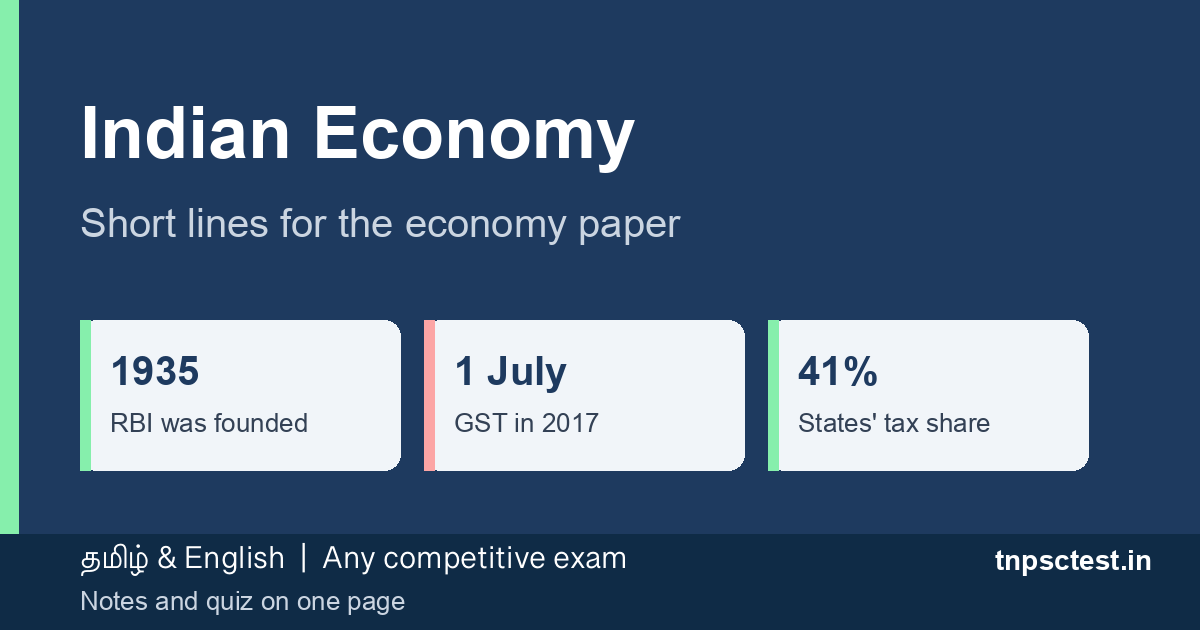
Two economy answers look right until you read the year. GDP is what is produced inside the country, and it is not a “development product.” The Reserve Bank opened in 1935, not in the year of independence. I keep the year next to the institution because that is how the question is set. The Tamil list sits above the English one, and the quiz waits at the bottom.
Start the test / தேர்வைத் தொடங்கு
நினைவு
- மொத்த உள்நாட்டு உற்பத்தி: ஒரு நாட்டின் எல்லைக்குள் உற்பத்தியான பொருளும் சேவையும். Gross Development Product அல்ல.
- ரிசர்வ் வங்கி தொடக்கம் 1935 ஏப்ரல் 1. நாட்டுடைமை 1949 ஜனவரி 1. 1947 விடுதலை. அது தொடங்கிய ஆண்டு அல்ல.
- நிதி ஆயோக் 2015 ஜனவரி 1. அது திட்டக் குழுவின் இடம். நிதிக் குழுவின் இடம் அல்ல.
- சரக்கு சேவை வரி 2017 ஜூலை 1. 2017 ஏப்ரல் 1 அல்ல.
- நிதி ஆண்டு ஏப்ரல் 1 முதல் மார்ச் 31 வரை.
- பதினாறாம் நிதிக் குழு தலைவர் அரவிந்த் பனகாரியா. அமைப்பு 2023 டிசம்பர் 31. அறிக்கை 2025 நவம்பர் 17. பகிர்வு 41 விழுக்காடு.
- பதினைந்தாம் குழு என் கே சிங். பதினான்காம் குழு ஒய் வி ரெட்டி.
வருமானம்
- உள்நாட்டு உற்பத்தி என்பது நாட்டின் எல்லைக்குள் நடந்த உற்பத்தி. இந்தியர் வெளிநாட்டில் சம்பாதித்தது இதில் தானாக சேராது.
- தேசிய உற்பத்தி = உள்நாட்டு உற்பத்தி + வெளிநாட்டிலிருந்து நிகர வருமானம்.
- நிகர உள்நாட்டு உற்பத்தி = உள்நாட்டு உற்பத்தி − தேய்மானம்.
- எல்லைக்குள் என்றால் உள்நாட்டு. குடிமக்களின் வருமானம் என்றால் தேசியம்.
- நடைமுறை விலையில் உள்ள எண் விலை ஏற்றத்தையும் சேர்க்கும். நிலையான விலையில் உள்ள எண்ணே உண்மையான வளர்ச்சி.
- இரண்டு ஆண்டுகளின் நடைமுறை எண்களைக் கழித்து முழுதையும் வளர்ச்சி என்று சொல்லாதே.
திட்டம்
- முதல் ஐந்தாண்டுத் திட்டம் 1951 முதல் 1956. முக்கியம் வேளாண்மை.
- இரண்டாம் திட்டம் 1956–61. மகலனோபிஸ் மாதிரி. கனரகத் தொழில். இது முதல் திட்டம் அல்ல.
- கடைசி ஐந்தாண்டுத் திட்டம் பன்னிரண்டாம் திட்டம், 2012 முதல் 2017.
- நிதி ஆயோக் 2015 ஜனவரி 1 அன்று திட்டக் குழுவின் இடத்தில் வந்தது. புதிய ஐந்தாண்டுத் திட்டம் இனி இல்லை.
- நிதி ஆயோக் கொள்கை அமைப்பு. பழைய திட்டக் குழு செய்தது போல் திட்ட நிதி பங்கீடு அதன் வேலை அல்ல.
- விதி 280 நிதிக் குழு தனியே இருக்கும். நிதி ஆயோக் அதை நீக்கவில்லை.
வங்கி
- ரிசர்வ் வங்கி சட்டம் 1934. வங்கி திறப்பு 1935 ஏப்ரல் 1. நாட்டுடைமை 1949 ஜனவரி 1. தலைமையகம் மும்பை.
- வங்கிகளின் வங்கி ரிசர்வ் வங்கி. வணிக வங்கிகளின் கணக்கு அங்கே. கடைசி கடன் வழங்குபவரும் அதுவே.
- பாரத ஸ்டேட் வங்கி பெரிய வணிக வங்கி. நபார்டு வேளாண் கடன். இரண்டும் வங்கிகளின் வங்கி அல்ல.
- கொள்கை வட்டி ரெப்போ. அதை நிர்ணயிப்பது பணவியல் கொள்கைக் குழு. உறுப்பினர் ஆறு. தலைவர் ரிசர்வ் வங்கி ஆளுநர்.
- ரெப்போ விகிதம் கூட்டத்திற்குக் கூட்டம் மாறும். பழைய புத்தகத்தில் உள்ள எண்ணை மனப்பாடம் செய்யாதே.
- ரெப்போ: வங்கி ரிசர்வ் வங்கியிடம் இரவல் வாங்கும் வட்டி. ரிவர்ஸ் ரெப்போ: வங்கி பணத்தை ரிசர்வ் வங்கியிடம் வைக்கும் வட்டி. இரண்டையும் மாற்றாதே.
- பண இருப்பு விகிதம்: வங்கி ரிசர்வ் வங்கியிடம் வைக்கும் காசு. சட்டப்பூர்வ நீர்மை விகிதம்: வங்கி வைத்திருக்கும் நீர்மை சொத்து. இரண்டு விகிதமும் மாறும். பொருளை நினைவில் வை. எண்ணை அல்ல.
- சில்லறை பணவீக்க இலக்கு 4 விழுக்காடு. ஏற்கும் வரம்பு 2 முதல் 6. இது இலக்கு. அளந்த பணவீக்கம் அல்ல. ரெப்போ விகிதமும் அல்ல.
வரி
- நிதி ஆண்டு ஏப்ரல் 1 முதல் மார்ச் 31. நாள்காட்டி ஆண்டு ஜனவரி 1 முதல் டிசம்பர் 31. இரண்டும் ஒன்றல்ல.
- சரக்கு சேவை வரி 2017 ஜூலை 1. அரசியலமைப்பு 101ஆம் திருத்தம் 2016. குழு விதி 279ஏ. தலைவர் ஒன்றிய நிதி அமைச்சர்.
- வரிக் குழுவின் தலைவர் நிதிக் குழுவின் தலைவர் அல்ல.
- ஒரு மாநிலத்துக்குள் விநியோகம் என்றால் மத்திய வரியும் மாநில வரியும். மாநிலங்களுக்கு இடையே அல்லது இறக்குமதி என்றால் ஒருங்கிணைந்த வரி.
- நிதிப் பற்றாக்குறை: மொத்த செலவு − கடன் தவிர்த்த மொத்த வரவு. வருவாய் பற்றாக்குறை: வருவாய் செலவு − வருவாய் வரவு.
- நிதிப் பற்றாக்குறையும் வருவாய் பற்றாக்குறையும் ஒன்றல்ல. இந்த ஆண்டு எண்ணை இங்கே எழுதாதே. அது பட்ஜெட்டில் மாறும்.
நிதிக்குழு
- விதி 280. ஐந்து ஆண்டுக்கு ஒருமுறை, அல்லது அதற்கு முன்.
- பதினான்காம் குழு ஒய் வி ரெட்டி. மாநிலப் பங்கு 42 விழுக்காடு.
- பதினைந்தாம் குழு என் கே சிங். பங்கு 41. ஜம்மு காஷ்மீர் இரண்டு ஒன்றியப் பகுதிகளானதால் ஒரு விழுக்காடு குறைந்தது.
- பதினாறாம் குழு அரவிந்த் பனகாரியா. அமைப்பு 2023 டிசம்பர் 31. அறிக்கை குடியரசுத் தலைவரிடம் 2025 நவம்பர் 17. காலம் 2026 ஏப்ரல் 1 முதல் 2031 மார்ச் 31. பங்கு மீண்டும் 41.
- அறிக்கை நாடாளுமன்றத்தில் 2026 பிப்ரவரி 1 அன்று வைக்கப்பட்டது. குழு அறிக்கை கொடுத்து முடிந்தது. அப்புறமும் அவர் பதவியில் இருக்கிறார் என்று எழுதாதே.
- வினா பதினாறாம் குழுவின் தலைவரைக் கேட்டால் பனகாரியா. சிங் பதினைந்தாம் குழு.
- பங்கீட்டுத் தொகுப்பு: ஒன்றிய வரி, செஸ் மற்றும் கூடுதல் வரி நீக்கிய பின், வசூல் செலவு நீக்கியது. செஸ் மாநிலங்களுக்குப் பகிரப்படாது.
சீர்திருத்தம்
- 1991 ஜூலை. பிரதமர் பி வி நரசிம்ம ராவ். நிதி அமைச்சர் மன்மோகன் சிங்.
- தொழில் அனுமதி தளர்த்தப்பட்டது. தனியார் பங்கு விரிந்தது. வெளி வர்த்தகம் திறந்தது. இதைத் தாராளமயம், தனியார்மயம், உலகமயம் என்று சொல்வர்.
- 1991இல் திட்டக் குழு நீக்கப்படவில்லை. அது 2015.
English
Remember
- GDP is the value of goods and services produced inside the country. It does not stand for Gross Development Product.
- The Reserve Bank was founded on 1 April 1935. It was nationalised on 1 January 1949. 1947 is independence, not the founding year.
- NITI Aayog started on 1 January 2015. It took the place of the Planning Commission. It did not take the place of the Finance Commission.
- GST started on 1 July 2017. Not 1 April 2017.
- The fiscal year runs from 1 April to 31 March.
- Arvind Panagariya chaired the 16th Finance Commission. It was constituted on 31 December 2023 and submitted its report on 17 November 2025. The states’ share stays 41 percent.
- N. K. Singh chaired the 15th. Y. V. Reddy chaired the 14th.
National income
- GDP counts production inside the territory. Income earned by Indians abroad is not added by itself.
- GNP equals GDP plus net factor income from abroad.
- NDP equals GDP minus depreciation.
- Inside the border means domestic. What the citizens earn means national.
- A current-price figure includes the rise in prices. A constant-price figure is the real growth.
- Do not subtract two current-price figures and call the whole gap growth.
Planning
- The first Five Year Plan, 1951 to 1956, centred on agriculture.
- The second plan, 1956–61, is the Mahalanobis plan. It centred on heavy industry. It is not the first plan.
- The twelfth plan, 2012 to 2017, was the last Five Year Plan.
- NITI Aayog replaced the Planning Commission on 1 January 2015. No new Five Year Plan has been made since.
- NITI Aayog is a policy body. It does not divide plan funds the way the Planning Commission did.
- Article 280, the Finance Commission, stays. NITI Aayog did not abolish it.
Banking
- The Reserve Bank of India Act is 1934. The bank opened on 1 April 1935. It was nationalised on 1 January 1949. The headquarters is Mumbai.
- The banker’s bank is the Reserve Bank. Commercial banks keep accounts there, and it is the lender of last resort.
- State Bank of India is the largest commercial bank. NABARD serves farm credit. Neither is the banker’s bank.
- The policy rate is the repo rate. The Monetary Policy Committee sets it. The committee has six members, and the Reserve Bank Governor chairs it.
- The repo rate changes from meeting to meeting. Do not memorise a number from an old booklet.
- Repo is the rate a bank pays to borrow from the Reserve Bank. Reverse repo is the rate the Reserve Bank pays when a bank parks money with it. Do not swap them.
- The cash reserve ratio is cash a bank keeps with the Reserve Bank. The statutory liquidity ratio is the liquid assets a bank must hold. Both ratios change. Remember the meaning, not a frozen percent.
- The retail inflation target is 4 percent, inside a band from 2 to 6. That is the target. It is not the inflation last month, and it is not the repo rate.
Tax
- The fiscal year runs from 1 April to 31 March. The calendar year runs from 1 January to 31 December. They are not the same year.
- GST started on 1 July 2017. The 101st amendment was in 2016. The council is Article 279A. Its chair is the Union Finance Minister.
- The GST council chair is not the Finance Commission chair.
- A supply inside one state draws central GST and state GST. A supply across states, or an import, draws integrated GST.
- The fiscal deficit is total spending minus total receipts other than borrowing. The revenue deficit is revenue spending minus revenue receipts.
- The fiscal deficit and the revenue deficit are not the same number. Do not write this year’s figure here. The budget changes it.
Finance Commission
- Article 280. Once in five years, or sooner.
- The 14th commission, Y. V. Reddy, set the states’ share at 42 percent.
- The 15th, N. K. Singh, set it at 41. One point came off when Jammu and Kashmir became two union territories.
- The 16th, Arvind Panagariya, was constituted on 31 December 2023. It submitted its report to the President on 17 November 2025. The award runs from 1 April 2026 to 31 March 2031. The share stays 41 percent.
- The report was laid in Parliament on 1 February 2026. The commission has finished its report. Do not write that he is still in office after that.
- If the question asks who chaired the 16th, the answer is Panagariya. Singh chaired the 15th.
- The divisible pool is Union tax after cess and surcharge are left out, and after the cost of collection. A cess is not shared with the states.
Reform
- July 1991. The Prime Minister was P. V. Narasimha Rao. The Finance Minister was Manmohan Singh.
- Licences were loosened, private ownership was widened, and foreign trade was opened. The usual name is liberalisation, privatisation, and globalisation.
- The Planning Commission was not abolished in 1991. That was 2015.
Quiz
This is the only quiz on the page. The opening set is the eight economy questions. Pull another 10 from the Indian Economy pool. Tamil and English are both in the quiz.
Indian Economy pool
Ten questions
The first 10 are ready. Pull another 10 from the Indian Economy pool. Switch to Tamil for the Tamil set.
1. Which Five Year Plan is known as 'Mahalanobis Plan'?
A) FirstB) SecondC) ThirdD) Fourth2. What does GDP stand for?
A) Gross Development ProductB) Gross Domestic ProductC) General Domestic ProductD) Gross Direct Product3. The Reserve Bank of India was established in which year?
A) 1935B) 1947C) 1949D) 19504. NITI Aayog replaced which body?
A) Finance CommissionB) Planning CommissionC) National Development CouncilD) Election Commission5. The fiscal year in India runs from:
A) January 1 to December 31B) April 1 to March 31C) July 1 to June 30D) October 1 to September 306. Which bank is known as the 'Banker's Bank' in India?
A) SBIB) PNBC) RBID) NABARD7. GST was implemented in India from:
A) April 1, 2017B) July 1, 2017C) January 1, 2018D) April 1, 20188. Who is the current chairperson of the 16th Finance Commission?
A) N.K. SinghB) Y.V. ReddyC) Arvind PanagariyaD) Urjit Patel
Answers and explanations
This set practises Indian Economy. Take the test, then open each explanation.
Question 1
Which Five Year Plan is known as 'Mahalanobis Plan'?
Answer: B. The Second Five Year Plan (1956-61) was based on P.C. Mahalanobis's model focusing on heavy industries.
Question 2
What does GDP stand for?
Answer: B. GDP = Gross Domestic Product, the total value of goods and services produced within a country.
Question 3
The Reserve Bank of India was established in which year?
Answer: A. RBI was established on April 1, 1935 under the RBI Act, 1934.
Question 4
NITI Aayog replaced which body?
Answer: B. NITI Aayog (National Institution for Transforming India) replaced the Planning Commission in 2015.
Question 5
The fiscal year in India runs from:
Answer: B. India's fiscal year runs from April 1 to March 31.
Question 6
Which bank is known as the 'Banker's Bank' in India?
Answer: C. RBI is the banker's bank as it provides banking services to commercial banks.
Question 7
GST was implemented in India from:
Answer: B. Goods and Services Tax (GST) was launched on July 1, 2017.
Question 8
Who is the current chairperson of the 16th Finance Commission?
Answer: C. Arvind Panagariya chairs the 16th Finance Commission constituted in 2023.
Answers and explanations
This set practises இந்தியப் பொருளாதாரம். Take the test, then open each explanation.
Question 1
இந்திய ரிசர்வ் வங்கி எந்த ஆண்டு செயல்படத் தொடங்கியது?
Answer: A. இந்திய ரிசர்வ் வங்கி சட்டம், 1934-ன் படி வங்கி 1935 ஏப்ரல் 2 அன்று செயல்படத் தொடங்கியது.
Question 2
இந்திய ரிசர்வ் வங்கி எப்போது தேசியமயமாக்கப்பட்டது?
Answer: B. இந்திய ரிசர்வ் வங்கி 1949 ஜனவரி 1 அன்று தேசியமயமாக்கப்பட்டது. அது 1935-ல் செயல்படத் தொடங்கியது.
Question 3
இந்தியாவில் சரக்கு மற்றும் சேவை வரி எந்த நாளில் அறிமுகப்படுத்தப்பட்டது?
Answer: C. சரக்கு மற்றும் சேவை வரி இந்தியாவில் 2017 ஜூலை 1 அன்று அறிமுகப்படுத்தப்பட்டது.
Question 4
2015-ல் உருவாக்கப்பட்ட நிதி ஆயோக் எந்த அமைப்புக்குப் பதிலாக அமைக்கப்பட்டது?
Answer: D. நிதி ஆயோக் 2015-ல் திட்டக் குழுவுக்குப் பதிலாக அமைக்கப்பட்டது.
Question 5
செபி இந்தியாவில் எந்தச் சந்தையை ஒழுங்குபடுத்தும் அமைப்பு?
Answer: A. செபி இந்தியாவில் பத்திரங்கள் மற்றும் பண்டச் சந்தையை ஒழுங்குபடுத்தும் அமைப்பு.
Question 6
1992-ல் செபிக்கு சட்டப்பூர்வ அதிகாரங்களை வழங்கிய சட்டம் எது?
Answer: B. 1992 ஜனவரி 30 அன்று செபி சட்டம், 1992 மூலம் செபிக்கு சட்டப்பூர்வ அதிகாரங்கள் வழங்கப்பட்டன.
Question 7
இந்தியாவில் ஜிஎஸ்டி அறிமுகமானபோது எந்த வரி நீக்கப்பட்ட வரிகளில் ஒன்று?
Answer: B. ஜிஎஸ்டி ஆக்ட்ராய் உள்ளிட்ட மறைமுக வரிகளை மாற்றியது. வருமான வரியை அது நீக்கவில்லை.
Question 8
ஜிடிபி ஒரு காலத்தில் உற்பத்தியான எவற்றின் சந்தை மதிப்பை அளக்கிறது?
Answer: B. ஜிடிபி ஒரு குறிப்பிட்ட காலத்தில் உற்பத்தியான இறுதிப் பொருள்கள் மற்றும் சேவைகளின் சந்தை மதிப்பு.
Question 9
பின்வருவனவற்றுள் ஜிடிபியின் முக்கியக் கூறு எது?
Answer: B. ஜிடிபியின் முக்கியக் கூறுகள் நுகர்வு, அரசு செலவு, நிகர ஏற்றுமதி மற்றும் முதலீடு.
Question 10
ஒரு இந்திய ரூபாய் எத்தனை பைசாவாகப் பிரிக்கப்படுகிறது?
Answer: C. இந்திய ரூபாய் 100 பைசாவாகப் பிரிக்கப்படுகிறது.
